The living room is usually the largest space in the house. It requires steady warmth throughout long winter evenings and remains the most visible heating element in the home. An undersized unit or poor placement results in cold spots by mid-winter, while an ill-considered design often looks like a clumsy afterthought on the wall. Choosing the right model is not about picking a decorative shape; it is about combining output, proportion, and design so the room feels naturally comfortable.
Structural Constraints and Thermal Load
Our range responds to the structural realities of UK housing. In properties with 2.7m+ ceiling heights or significant glazing ratios, standard panel radiators are frequently undersized for the volume of air they must heat. For these spaces, we provide high-output column and designer models with the surface area and verified output to match the calculated requirement. The goal is to ensure the radiator’s performance compensates for increased heat loss through large windows or uninsulated masonry.
Material Choice and System Temperature
Material selection dictates how the room holds its temperature. Cast iron provides sustained output and releases heat gradually, making it ideal for period homes with lower insulation levels. Aluminium responds quickly to thermostat changes, which is essential for modern, well-insulated builds or low-flow heating systems. Both have their place, but the choice must align with how the system is balanced.
With over 200 RAL colours available as standard, we treat the finish as a technical specification. A radiator can either blend into the masonry or provide contrast as a deliberate feature, but the decision is technical before it is decorative. Finish, size, and heating capacity must work together as a considered specification.
Sizing for Specific Layouts
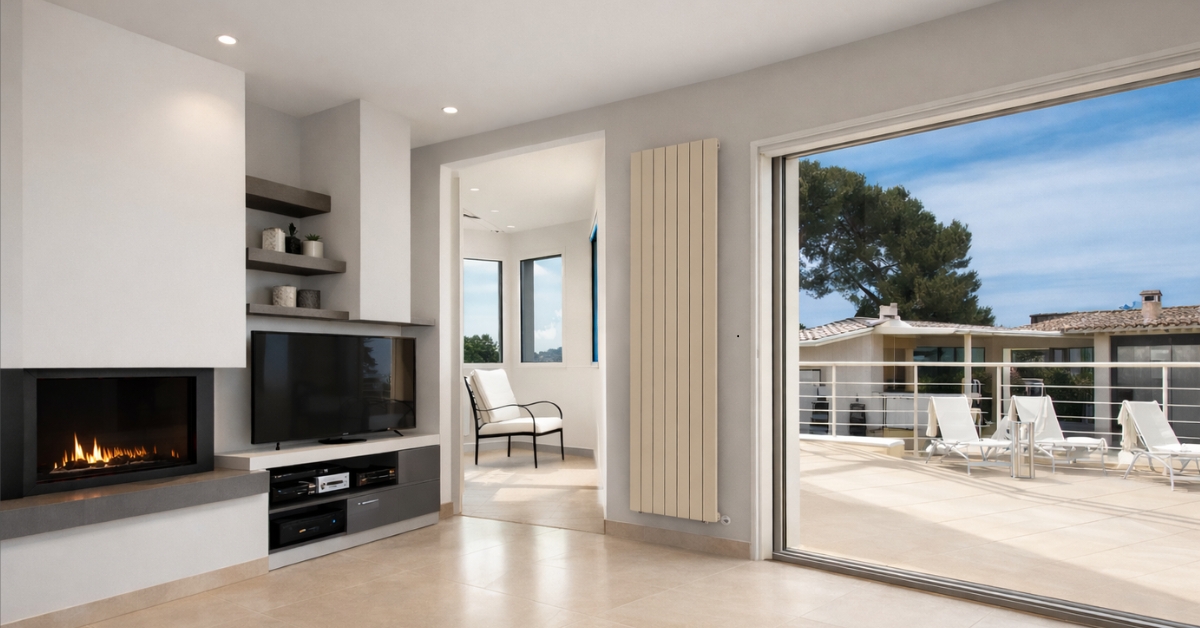
In compact spaces where wall area is restricted, vertical radiators utilise height rather than width, preserving floor space for furniture. For Victorian bay windows, low-profile horizontal units — often 300mm high — sit beneath sills without obstructing light or glazing lines.
In large or open-plan areas, heat disperses widely and the heating load increases with the room volume. A BTU calculation is the necessary starting point, but adding a 10–15% margin creates the required headroom for sub-zero periods. In these environments, made-to-measure solutions ensure that dimensions and pipework align with the existing infrastructure, avoiding awkward runs while delivering the required output.
Style and Function
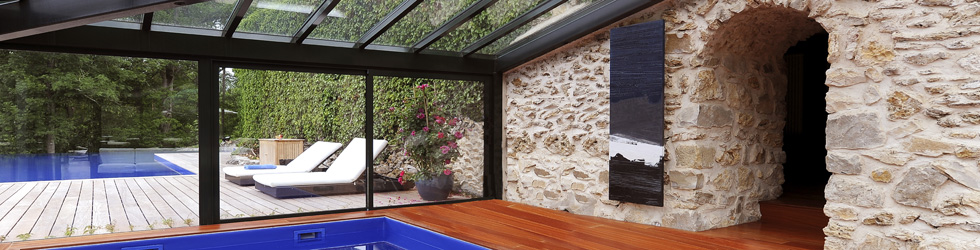
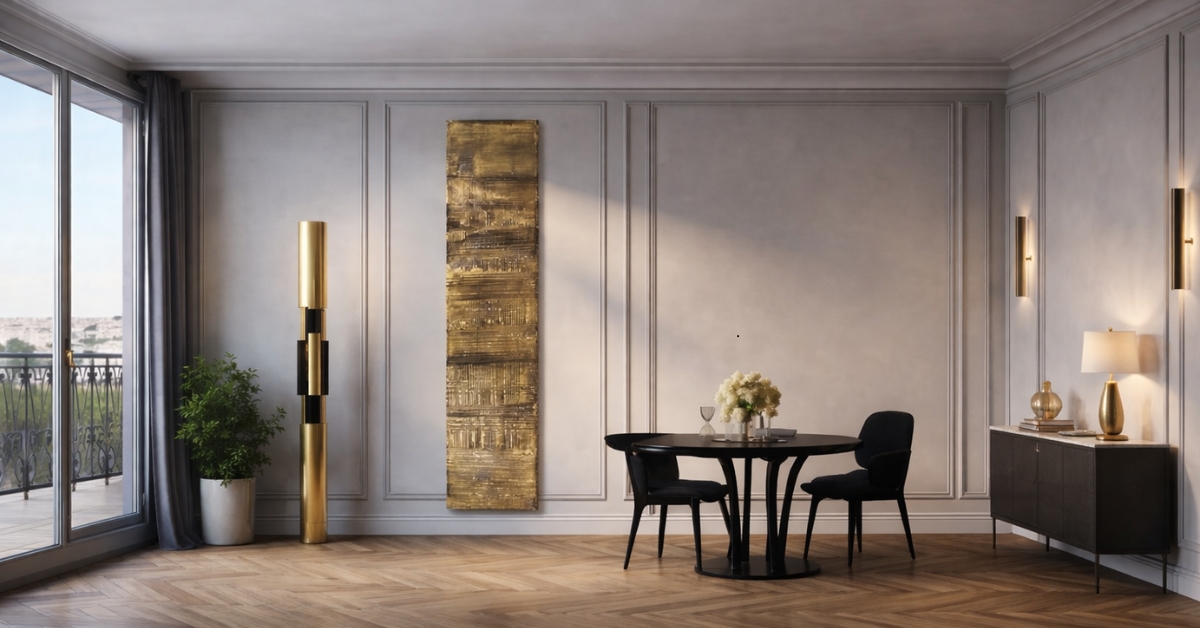
A well-chosen radiator does not force a choice between appearance and performance. Column radiators offer a timeless profile and strong heat retention, while flat panel models provide a cleaner, contemporary aesthetic. Where the objective is to elevate the heating element into a deliberate focal point, our art radiators provide a refined aesthetic without compromising on these technical requirements. When these conditions are met, heating integrates with the architecture. Real comfort is the result of correct specification.