
If you’ve ever woken up too warm at 3am or shivered your way through a winter morning, you’ve probably wondered what the right bedroom temperature actually is. It’s a common enough question in British homes, especially in older properties where insulation varies wildly from one room to the next.
The ideal bedroom temperature for sleeping in the UK is between 16°C and 18°C. This range is generally considered the sweet spot for most adults, as it supports the body’s natural cooling process during the night without leaving the room uncomfortably cold.
Why 16–18°C is the Best Bedroom Temperature
This range strikes a sensible balance. It is cool enough to help your body settle into sleep, but not so cold that you’re waking up in the early hours because the chill has set in. While many people keep their living rooms at 20°C or higher, a bedroom temperature above this level often leads to a restless, stuffy night.
In practical terms, the right setting often depends on your preference for bedding:
- 16°C is often preferred by those who use a heavier winter duvet.
- 18°C tends to feel right for most people when there is a cold snap outside.
- Anything consistently above 20°C usually makes a room feel airless overnight.
Why a Cooler Room Actually Works
Your body naturally lowers its temperature as you drift off. If the bedroom is too warm, that process gets interrupted, which is why we often toss and turn during a heatwave. Keeping the room slightly cool helps you fall asleep more easily and reduces the chance of waking up from overheating.
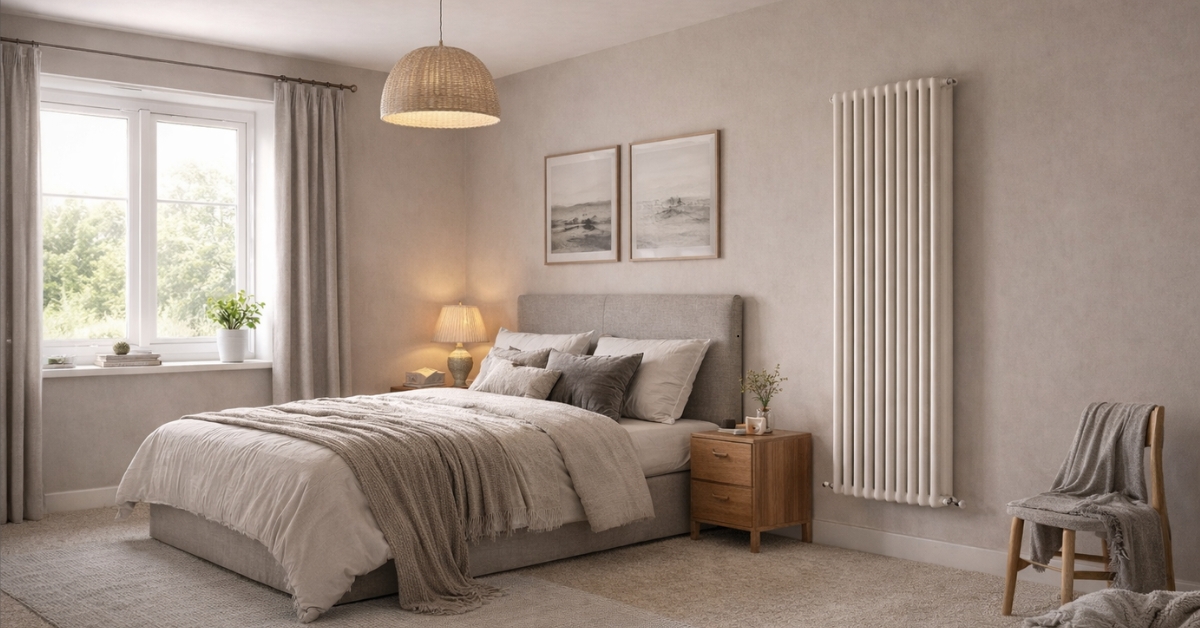
In many British homes—especially Victorian terraces or period conversions—bedrooms are often draughty or overly warm depending on where the radiator sits. This is why getting your bedroom radiators sized correctly makes such a noticeable difference to your sleep quality.
Should the Radiator Stay On Overnight?
Generally, it is better to let a radiator tick over quietly at a steady temperature than to switch it off completely and then blast the heating at 7am. Sudden temperature swings aren't great for comfort, and they often force the boiler to work quite so hard to get the room back up to a decent heat.
A thermostatic radiator valve (TRV) set to maintain that 16–18°C range is the most sensible approach. It allows the room to hold a consistent background warmth without the space becoming a furnace. The goal isn’t to heat the bedroom like a living room; it’s simply to prevent the cold from settling in.
When the Bedroom Temperature Never Feels Right
If a room stays cold despite the radiator being on, or feels too warm even on a low setting, the issue is often the hardware rather than the thermostat.
A radiator that’s too small for the room will run flat out, creating uneven heat and often making expansion noises—that classic clicking—that keep light sleepers awake. On the other hand, an oversized unit might overheat the space too quickly. Matching the heat output to the room’s actual size is what keeps the temperature steady without the fuss.
Adjusting for the Seasons
Winter
Aim for 17–18°C. This keeps the room comfortable and helps prevent condensation on the windows without making the air feel too dry.
Spring & Autumn
You might find 16–17°C is plenty. This is usually the time to adjust your duvet tog rating rather than fiddling with the boiler settings.
Summer
Heating isn't the issue here, but as soon as the first autumn chill hits, getting back to that steady 16–18°C baseline is the best way to ensure you aren't jolted awake at 2am.

Summary
For most people in the UK, the ideal bedroom temperature for sleeping is about 16–18°C. It’s cool enough for restful sleep, warm enough to stay comfortable, and steady enough to let you sleep through. Getting the setting right is important, but making sure your radiator can maintain that temperature quietly is just as vital for a good night’s rest.
How to Calculate the BTU for a Bedroom (Without Oversizing It)
Most BTU calculators in the UK assume you want a target temperature of around 21°C. That is fine for a living room, but it’s warmer than most people actually want in a bedroom. If you’re aiming for that 16–18°C sleeping range, the standard calculations will often leave you with a radiator that is unnecessarily large.
Here is the sensible way to approach it:
Step 1: Get the Baseline Figure
Use a standard calculator and enter the room’s dimensions, the number of external walls, and the type of glazing you have. Let’s say the result comes back suggesting you need 5,000 BTU to reach 21°C.
Step 2: Adjust for Sleeping Comfort
Since bedrooms don’t need to be heated like living spaces, you can typically reduce that figure by around 15%. It is worth noting that this is a general average; depending on your home’s insulation and local climate, the exact difference can vary slightly, but 15% is usually a safe starting point.
Example: 5,000 BTU × 0.85 = 4,250 BTU
This adjusted figure is much better suited to maintaining a steady background warmth. It prevents the radiator from being so powerful that it constantly overshoots the thermostat, which is often a contributing factor to that annoying clicking noise from metal expansion at night.
One Important Note
If you have moved to a heat pump or are running a low-temperature system, the output of the radiator changes. In these cases, you’ll need a larger surface area to deliver that same 4,250 BTU. Always check the output at the flow temperature your system actually runs at, rather than just relying on the standard ΔT50 figures.